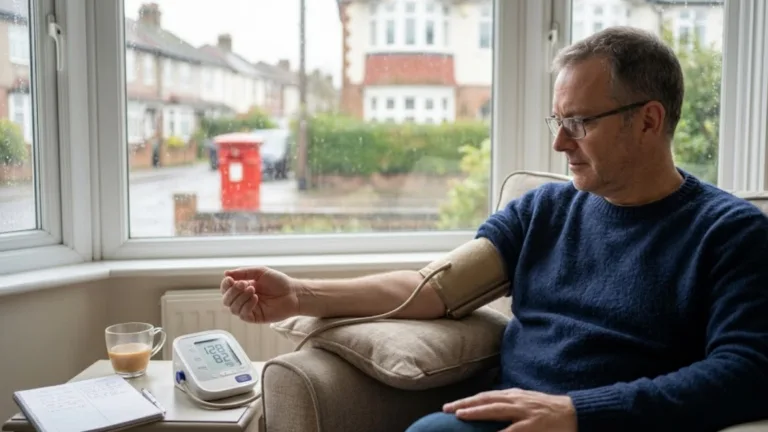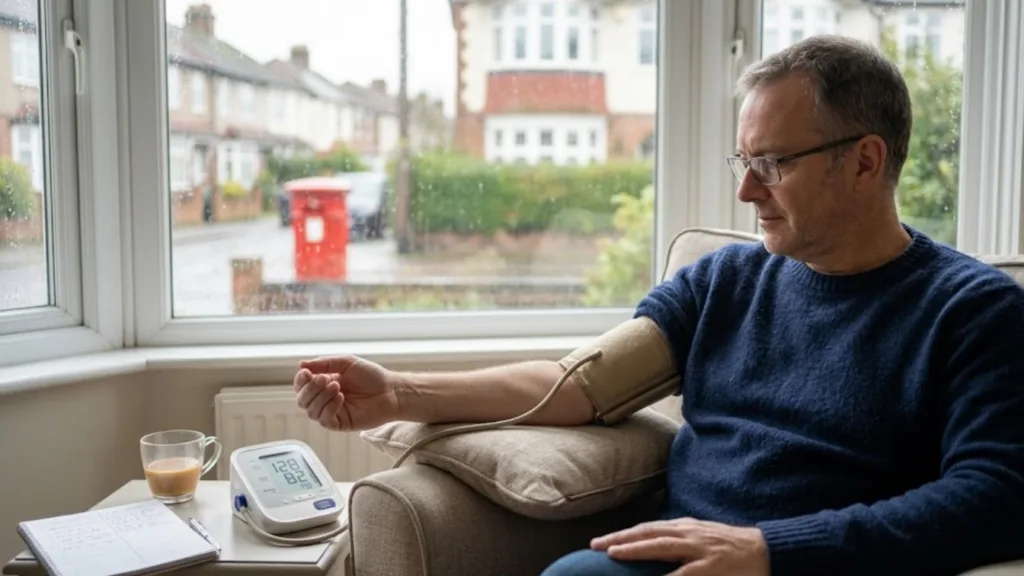
For the millions of people in the UK living with hypertension, the home blood pressure monitor has become an essential piece of kit. However, a common source of anxiety for many patients is the “numbers gap.” You might record a perfect 120/80 mmHg at your kitchen table, only to have your GP or practice nurse record 145/90 mmHg twenty minutes later.
This discrepancy often leads to a lack of trust in home devices, but the truth is more nuanced. While it is easy to blame a “cheap” monitor, the difference is usually down to a mix of human biology, environmental triggers, and technical precision.
The “White Coat” Phenomenon: It’s Not Just in Your Head
The most prevalent reason for higher readings in a clinical setting is White Coat Hypertension. Even if you feel perfectly calm and have a great relationship with your GP, the subconscious mind often perceives a medical environment as a “high-stakes” situation.
When you enter a surgery, your sympathetic nervous system can trigger a subtle “fight or flight” response. This releases a small surge of adrenaline, causing your heart to beat slightly faster and your blood vessels to constrict. In many patients, this can inflate the systolic (top) number by as much as 20 mmHg. Conversely, some people experience “masked hypertension,” where home readings are higher than clinical ones—often due to the stress of home life or work that subsides once they are in the quiet of a clinic.
The “5-Minute Rule” and the Impact of Movement
In a busy UK GP surgery, efficiency is key. You might be called from the waiting room, walk down a corridor, and immediately sit for your reading. In contrast, at home, you are likely already settled.
To get an accurate reading, the British Hypertension Society recommends the 5-minute rule: you must sit in total silence and stillness for at least five minutes before pressing the button.
- Postural Errors: If your feet are crossed at the ankles or knees, your blood pressure can rise by 2–8 mmHg.
- Arm Position: If your arm is hanging down by your side rather than resting on a table at heart level, the monitor has to work against gravity, often resulting in an artificially high reading.
- The Power of Speech: Talking—or even listening to someone else talk—during the measurement can add 10 mmHg to your result.
Equipment Differences: Oscillometric vs. Auscultatory
Most home monitors bought from pharmacies like Boots or Superdrug use the oscillometric method. They sense the vibration of blood against the artery walls and use an algorithm to calculate the pressure.
Many GPs still prefer the auscultatory method, using a manual cuff and a stethoscope to listen for “Korotkoff sounds.” While digital technology has improved immensely, the algorithms in home devices can sometimes struggle with irregular heartbeats (arrhythmia) or very stiff arteries, leading to variations between your home device and the professional manual equipment used by a doctor.
The Importance of Cuff Calibration and Sizing
A “one size fits all” approach does not work for blood pressure. If your arm circumference is larger than average and you use a standard cuff, the monitor will have to exert extra force to compress the artery, leading to a falsely high reading. Conversely, a cuff that is too loose will provide a reading that is lower than reality.
Furthermore, home monitors are rarely recalibrated. While your GP’s equipment is subject to regular medical auditing, a home device that has been sitting in a drawer for three years may have lost its precision.
Diurnal Variation: Your Body’s Internal Clock
Your blood pressure is not a static number; it is a moving target. In the UK, most GP appointments happen during the day, but blood pressure naturally fluctuates according to your circadian rhythm. It is typically lowest while you sleep, rises sharply upon waking (the “morning surge”), and fluctuates based on activity, temperature, and stress throughout the afternoon. If you compare a morning GP reading to an evening home reading, you are essentially comparing two different biological “zones.”
The “Rule of Three” for Accuracy
To bridge the gap, medical professionals now advise the Rule of Three. Don’t rely on a single “snapshot.” Take three readings at home, one minute apart. Usually, the first reading is the highest because of the “startle” effect of the cuff tightening. Discard the first, average the second and third, and keep a log of these averages over a week.
Medical Disclaimer
This article is for informational purposes only and does not constitute medical advice, diagnosis, or treatment. Always seek the advice of your GP or another qualified health provider with any questions you may have regarding a medical condition. Never humiliate or disregard professional medical advice or delay in seeking it because of something you have read online. If you believe your home monitor is inaccurate, take it to your next GP appointment to have it validated against the surgery’s equipment.